Effective July 1, 2024
1.0 Purpose
The purpose of the proposed Disability Insurance Program Rules and Regulations is to provide State employees and DIP/RTW Representatives with access to policies currently in force and in practice with respect to the Disability Insurance Program. The Rules and Regulations encompass and combine processes that have been developed since inception of the Disability Insurance Program.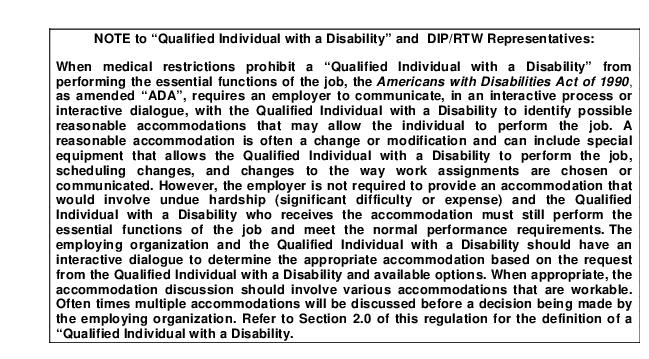
2.0 Definitions
The following words and terms, when used in this regulation, have the following meaning:
“Appeal” means the action you can take in accordance with 29 Del.C. §5258 if you disagree with a coverage decision.
“Base Rate of Compensation” means the employee’s usual rate of pay, including hazardous duty pay if applicable. Base Rate of Compensation does not include commissions, bonuses, shift differential pay, overtime pay or fringe benefit or extra compensation.
“Claimant” means a person enrolled in the DIP who applies for STD or LTD benefits or an extension of STD or LTD benefits or who is receiving or has received STD or LTD benefits.
“Creditable Compensation” means as defined in 29 Del.C. §5251(c), the base rate of compensation that the employee received on the last day of employment before the employee developed a disability.
"DIP" means the Disability Insurance Program as defined in 29 Del.C. §5256.
"DIP Insurance Carrier or Third-Party Administrator" means the State's selected company for this service.
"DIP/RTW Representatives" means employing organizations' Human Resource, Benefits, or Payroll Representatives with DIP or Return to Work "RTW" administrative or paying responsibilities.
"DOE" means Department of Education.
"Elimination Period" means the period of time you must be disabled before disability benefits begin. The elimination period in the Short Term Disability “STD” program is 30 calendar days. The elimination period in the Long Term Disability “LTD” program is the last to be satisfied of the following:
“Employee” means an eligible “employee” as defined in 29 Del.C. §5501(f), who chooses to participate in the DIP as specified in 29 Del.C. §5519.
This shall include an employee who is collecting benefits in accordance with 11 Del.C. §8352(4).
“Employing Organization” means the agency, school district, charter school, institution of higher education, court system or Delaware Solid Waste Authority (DSWA) employing claimants in a position covered by the Delaware State Employees Pension Plan in accordance with 29 Del.C. Ch. 55 who are U.S. citizens or U.S. residents actively at work for 1 full day on or after January 1, 2006.
“Essential Duty” means a duty that is substantial, not incidental; is fundamental or inherent to the occupation; and cannot be reasonably omitted or changed. To be at work for the number of hours in the employee’s regularly scheduled workweek is also an essential duty.
"Family and Medical Leave Act” or “FMLA" means a labor law that entitles eligible employees to take up to 12 workweeks of unpaid, job-protected leave during a 12 month period for specified family and medical reasons with continuation of group health insurance plan coverage under the same terms and conditions as if the employee had not taken leave as defined in 19 Del.C. §3702(a).
"Hazardous Duty Pay" means a payment to employees who are determined by the State of Delaware to be working in circumstances that involve an unusual risk of serious physical injury, impairment to health or death resulting from accidental, negligent, or intentional causes. Employees entitled to hazardous duty pay qualify under 29 Del.C. §5916(e), 29 Del.C. §5933(c) and (d), and 83 Del. Laws, c. 325, § 30.
"Health Care Provider" means an individual licensed, certified or otherwise authorized or permitted by law to provide health care in the ordinary course of business or practice of a profession.
"Insurance Coverage Office” or “ICO" means the State office responsible for providing quality support for the state government's insurance needs. The office is responsible for managing the insurance program for state owned transportation, buildings and property and workers' compensation, as well as reviewing state facilities for safety issues and providing safety programs to state employees.
"Interactive Process" means when medical restrictions forbid an employee with a disability from doing the job, the Americans with Disabilities Act “ADA” requires an employer to communicate with the employee concerning an accommodation. This exchange has been described variously as the "core" or "proactive" process, "cooperative problem solving," "open and individualized exchange," a "search", and a "flexible give-and-take." Most frequently, it is called the "interactive process" or by the redundant term, "interactive dialogue." The purpose of this dialogue is to "identify the precise limitations resulting from the disability and potential reasonable accommodations that could overcome those limitations." 29 C.F.R. § 1630.2(o)(3).
“Less Than Twelve Month Educational Employees” means those employed by School Districts, Charter Schools, the DOE, University of Delaware, Delaware State University and Delaware Technical Community College whose normal working period is a school year or semester which is less than 12 months in duration per calendar year. “Less Than Twelve Month Educational Employees” are not defined or categorized by the employee's length of employment.
“LTD” means long term disability.
“Medical Care” means when a health care provider is consulted or medical advice is given or treatment is recommended, prescribed by, or received from a health care provider.
“Member” means a person enrolled in or was previously enrolled in the DIP.
"Merit Employee" means positions that are subject to the rights, rules, and regulations in accordance with the Merit Rules.
"Non-Merit Employee" means positions that are not subject to the rights, rules, and regulations governed by the Merit Rules.
“Normal Working Periods” means the scheduled working days for the employee.
“Parental Leave” means a law that entitles full-time employees in the employment of the State, a reorganized school district, charter school or vocational school district for at least 1 year, to 12 weeks of paid leave as of the birth or adoption of a child who is 6 years of age or younger to care for or bond with the child in accordance with 29 Del.C. §5253 and 14 Del.C. §1333.
"Personal Injury Protection” or “PIP” means insurance coverage that is statutorily mandated for Delaware registered state owned transportation. 21 Del.C. §2118 requires minimum PIP limits of $15,000 per person; $30,000 per accident for reasonable and necessary medical expenses, net amount of loss earnings, funeral expenses, and substitute services incurred within 2 years of an automobile accident.
“Pre-Disability Base Pay” or "Creditable Compensation" means the employee’s usual rate of pay paid to the employee on the last day of employment before the employee developed a disability including hazardous duty pay, if applicable.
“Pre-Existing Condition” means an accidental bodily injury, sickness, mental illness, pregnancy, or episode of substance abuse or the manifestations, symptoms, findings, or aggravations related to or resulting from the accidental bodily injury, sickness, mental condition, pregnancy or substance abuse for which the employee received medical care during the 3 month period that ends the day before:
"Qualified Individual with a Disability" means an individual who has satisfied the requisite skill, experience, education, and other job-related requirements of the employment position that the individual holds, and who, with or without reasonable accommodation, can perform the essential functions of the position. A person with a disability according to the ADA is defined as someone who:
|
•
|
Has a physical or mental impairment that substantially limits 1 or more of the major life activities of the individual;
|
“Reasonable Accommodation” means a change in the work environment or in the way things are customarily done that would enable an individual with a disability to have equal employment opportunities, and includes the following:
“Return to Work Coordinator” or “RTWC” means the person in the Department of Human Resources, Statewide Benefits Office "SBO" who provides RTW and stay at work assistance to employees or former employees who are currently on an approved STD or LTD claim.
"RTW" means return to work.
"Salary Supplement" means in accordance with 29 Del.C. §5933 that whenever an officer as defined in 29 Del.C. §5812(n)(1), or employee of the State including those exempt from the classified service, qualifies for workers' compensation disability benefits, the officer or employee, for a period not to exceed 3 months from the date the compensation begins, is not charged sick leave and shall receive from the State the difference, if any, between the total of: The amount of the compensation, disability benefits received under the Federal Social Security Act, and another employer supported disability program, and the amount of wages to which the officer or employee is entitled on the date the compensation begins, provided the injury or disease for which the compensation is paid is not the direct result of the officer or employee's misconduct and occurs during a period of employment for which the employee is entitled to receive wages. No more than 1 period of supplemental pay shall be made under this subsection for a work injury, including a recurrence or aggravation of that work injury. The 3 month limitation will not apply to any employee injured while performing a hazardous duty assignment and whose injury or injuries arose out of and in the course of performing hazardous duty; providing, however, the employee will be entitled to the benefits of this section for not more than 12 months. Those positions are outlined in 29 Del.C. §5933 (c) and (d) and 29 Del.C. §5916(e).
"SBO" means Statewide Benefits Office. SBO is the "administrative arm" of the State Employee Benefits Committee "SEBC", meaning SBO is responsible for the administration of all health and related benefit programs, including the DIP and RTW.
"SEBC" means the State Employee Benefits Committee. (As the "Committee" is the SEBC, we have incorporated the acronym "SEBC" in lieu of the term "Committee" in the definitions section of this regulation.)
"Stay at Work Assistance" means consultation, advisement, or other assistance provided to an employee in order to allow the employee to remain in the current job position and perform essential functions of that position.
"STD" means short term disability.
"Temporary" means not permanent; provisional or lasting only a short time.
"Workers' Compensation" or “WC” means is a system, established under 19 Del.C. Ch. 23, which provides compensation to workers who are injured or who contract an occupational disease while working.
18 DE Reg. 79 (07/01/14)
19 DE Reg. 78 (07/01/15)
20 DE Reg. 70 (07/01/16)
21 DE Reg. 234 (09/01/17)
22 DE Reg. 861 (04/01/19)
28 DE Reg. 57 (07/01/24)
3.0 Eligibility and Enrollment Rules
3.1 In accordance with the authority vested in the SEBC by 29 Del.C. §5210(4), §9602(b)(4), and §5255, the SEBC adopts these rules for the State of Delaware’s DIP. In the event of conflict between these rules and the Delaware Code, the Delaware Code takes precedence over these rules. The 3 parts to the DIP are STD, LTD, and RTW. The Rules and Regulations contained in this are to be used in conjunction with the STD and LTD benefit booklets displayed on the SBO website at de.gov/statewidebenefits.
3.2 An employee must meet 1 of the following criteria to be eligible for enrollment in the DIP:
3.2.1 Hired on or after January 1, 2006 into a position covered by the Delaware State Employees Pension Plan in accordance with 29 Del.C. Ch. 55.
3.2.2 As of January 1, 2006 had fewer than 5 credited years of service.
3.2.3 As of January 1, 2006 had 5 or more years of credited service and chose enrollment in the DIP.
3.2.4 In accordance with 29 Del.C. §5251(e), a retired Delaware State Police Trooper employed in a pension covered position in the Delaware State Employees’ Pension Plan on or after July 1, 2008.
3.3 Enrollment in the DIP means that the employee is enrolled in the STD and LTD plans.
3.4 Eligibility for participation in the DIP will end on the earliest to occur of:
3.4.1 The date in which the State of Delaware ceases to sponsor this program; or
3.4.2 The date the employee is no longer covered by the Delaware State Employees’ Pension Plan in accordance with 29 Del.C. §5519; or
3.4.3 Service retirement; or
3.4.4 The death of the employee.
3.5 Dependents are not eligible for enrollment in the DIP.
3.6 Coverage is effective the first day the employee is actively at work for 1 full day on or after January 1, 2006. There is no waiting period to be enrolled in the DIP.
3.7 In accordance with 29 Del.C. §5252, the State will pay premium or subscription charges for the full cost of providing coverage for the DIP.
19 DE Reg. 78 (07/01/15)
22 DE Reg. 861 (04/01/19)
28 DE Reg. 57 (07/01/24)
4.0 STD Elimination Period
4.1 Employees will be eligible to utilize earned sick leave, annual leave, compensatory time or donated leave for absences due to accident, illness, or injury for periods before disability benefits begin, so that the employee receives 100% of creditable compensation not to exceed the employee’s sick leave, annual leave or these combined leave balances based on the rules that apply by the claimant's employing organization. As of the birth of a child, employees entitled to parental leave may utilize parental leave to satisfy the elimination period for periods before STD benefits begin. Merit employees who are injured on the job and approved for WC should not be charged with sick leave for any portion of the day of the injury, in accordance with Merit Rule 5.3.8. Non-Merit employees must follow the rules that apply to the employee's employing organization.
4.2 In accordance with 29 Del.C. §5253(b)(1), STD benefits will begin after the exhaustion of the calendar day elimination period. Consistent with the provisions of 29 Del.C. §5255 that allow the DIP insurance carrier or third-party administrator to determine eligibility of an employee to receive STD benefits, the elimination period will begin on the date of disability and STD benefits will begin on the 31st calendar day of disability. The calendar day elimination period does not have to be satisfied consecutively however, if an employee returns to work for 1 day or less during the calendar day elimination period, but cannot continue to work thereafter, the period worked will not be considered to have interrupted the calendar day elimination period.
4.3 In accordance with 29 Del.C. §5253(b)(1), the calendar day elimination period must begin and conclude within normal working periods for employees who work less than 12 months per calendar year. “Normal working periods” are the scheduled working days of the employee. Disabilities that begin during a non-working period may not be claimed until the normal working period resumes at the start of the following school year for Less Than Twelve Month Educational Employees.
4.4 In accordance with 29 Del.C. §5253(b)(5), if an employee returns to the employee’s position on a full time basis for 15 consecutive calendar days or longer, the succeeding period of disability for which the employee will become eligible will be a new period of STD with a corresponding calendar day elimination period. A new period of STD will not be granted if an employee returns to work on a part-time basis.
19 DE Reg. 78 (07/01/15)
20 DE Reg. 70 (07/01/16)
22 DE Reg. 861 (04/01/19)
28 DE Reg. 57 (07/01/24)
5.0 STD Claim Filing Requirements for Employees & DIP/RTW Representatives
5.1 Employees
5.1.1 Employees enrolled in the DIP are required to file a STD claim with the DIP insurance carrier or third-party administrator if the employee expects to be out of work for at least 30 calendar days even if the employee applied for or is receiving lost wage benefits (i.e., Workers’ Compensation) or parental leave at the birth of a child. Once an employee exhausts the elimination period, the employee will be deemed to have applied for benefits under this subsection and will not be eligible to utilize paid sick leave or annual leave in lieu of application for STD. Employees not meeting the requirements noted in Section 9.0 of this regulation, will be deemed to have applied for benefits under this subsection and will not be eligible to utilize paid sick leave or annual leave in lieu of application for an extension of STD benefits.
5.1.2 Employees enrolled in DIP who expect to be out of work for the length of the calendar day elimination period are required to file a STD claim in a complete and timely manner, even if the employee applied for or is receiving WC benefits, parental leave, or Other Income Benefits defined in subsections 8.6 and 8.7 of this regulation. Employees injured while performing a hazardous duty assignment, who qualify under 29 Del.C. §5916(e), 29 Del.C. §5933 (c) and (d), and 83 Del. Laws, c. 325, § 30 are required to file a STD claim in a complete and timely manner if the employee expects to be out of work for the length of the calendar day elimination period. Employing organizations are required to provide the DIP insurance carrier or third-party administrator with the names of employees injured while performing a hazardous duty assignment entitled to be paid the 12 month salary supplement.
5.1.3 Employees are required to immediately report absences from work to the employee’s supervisor and are required to stay in contact with the employee’s supervisor and Human Resource Benefits Office during absences from work. For specific reporting time frames, Merit employees should refer to the Merit Rules. Non-Merit employees should refer to the employing organization’s leave policy. Required documentation must be provided when requested by the DIP insurance carrier or third-party administrator, the employee's Human Resource Benefits Office, the SBO RTWC, and other representatives from the SBO. It is the employee’s responsibility to promptly acknowledge receipt of the STD Form Letter communication from the employee’s Human Resource Benefits Office by signing and returning an “Employee Acknowledgement” to the Human Resource Benefits Office within 5 business days of receiving the letter from the Human Resource Benefits Office.
5.1.4 Employees must contact health care providers to authorize the release of medical information required by the SBO RTWC or the DIP insurance carrier or third-party administrator. It is the employee’s responsibility to be sure that the medical documentation is submitted to the DIP insurance carrier or third-party administrator and the SBO RTWC in a complete and timely manner throughout the duration of the disability as requested. Employees are required to take the action necessary in a timely manner to maintain the claim in an approved status throughout the period of disability.
5.1.5 Employees are responsible for the payment of fees requested by health care providers for the release of preliminary medical information or subsequent attending physician statements APS.
5.1.6 Medical documentation by the employee’s health care providers in the form and manner determined by the DIP insurance carrier or third-party administrator must be submitted to determine benefit payment. A health care provider's out of work note will not be sufficient. Medical documentation consists of, but is not limited to a conversation with the employee’s health care providers, nurse or other healthcare providers identifying restrictions or limitations or the lack of, test results, lab records, etc.
5.2 DIP/RTW Representatives
5.2.1 Supervisors are required to immediately report an employee's absence from work to the Human Resource Benefits Office. The Human Resource Benefits Office must send the STD Form Letter to the employee no later than the fifth calendar day of absence from work to remind the employee of the STD claim filing requirement in the event the employee expects to be out of work for at least the length of the elimination period.
5.2.2 The Human Resource Benefits Office is responsible for following up with the employee to confirm the STD Claim has been filed in a timely manner. The Human Resource Benefits Office is also responsible for following up with the employee to be sure the employee is requesting an extension of benefits, if applicable and in a timely manner.
5.2.3 It is the responsibility of the Human Resource Benefits Office to follow up with the employee on all requests that have not been responded to.
16 DE Reg. 1004 (03/01/13)
18 DE Reg. 79 (07/01/14)
19 DE Reg. 78 (07/01/15)
20 DE Reg. 70 (07/01/16)
22 DE Reg. 861 (04/01/19)
28 DE Reg. 57 (07/01/24)
6.0 STD Coverage
6.1 For a disability caused by a covered sickness or accident, STD benefits begin after completion of the calendar day elimination period for up to a maximum benefit period of 182 calendar days starting with the employee’s date of disability per 29 Del.C. §5253(b). The 182 calendar day STD benefit period includes the calendar day elimination period. Each day an employee receives a total disability benefit or a residual (partial) disability benefit or the minimum disability benefit, counts toward exhaustion of the maximum 182 calendar day STD benefit period.
6.2 The employing organization is responsible for providing the DIP insurance carrier or third-party administrator with information needed to process an employee's STD claim that is not shared on the electronic enrollment file to the DIP insurance carrier or third-party administrator because it is not stored in the State of Delaware's Human Resource Benefits & Payroll systems, such as last day worked, partial days worked and whether the employee was awarded the 3 month or 12 month Salary Supplement. Organizations with employees injured performing hazardous duty assignments entitled to the 12 month salary supplement must notify the DIP insurance carrier or third-party administrator of the employees entitlement to the 12 month (versus 3 month) salary supplement. This information must be provided by the employing organization to the DIP insurance carrier or third-party administrator within 48 hours of the date when the employee files the STD claim or from the date the employing organization receives formal notification of an employee's STD claim filing from the DIP insurance carrier or third-party administrator.
6.3 “Total Disability” or “Totally Disabled” means the employee is prevented by accidental bodily injury, sickness, mental condition, substance abuse, pregnancy, or loss of license due to medical condition from performing the essential duties of the employee's occupation, and as a result, the employee is earning 20% or less of the base rate of compensation received on the last day of employment before becoming disabled. IMPORTANT NOTE: Weekly earnings means the employee's usual base rate of pay including hazardous duty pay if applicable. Weekly earnings do not include commissions, bonuses, shift differential pay, overtime pay or another fringe benefit or extra compensation. If disabled, weekly earnings will be the rate on the last day as an active full-time employee before becoming totally disabled.
6.4 The STD program does not cover:
6.4.1 Injury, sickness, mental condition, substance abuse, or pregnancy not being treated by a health care provider.
6.4.2 Disability caused by or contributed to by war or act of war, declared or not;
6.4.3 Disability caused by commission of or attempt to commit a felony, or to which a contributing cause was the employee being engaged in an illegal occupation or activity;
6.4.4 Disability caused by or contributed to an intentionally self-inflicted injury, and;
6.4.5 Injury sustained as a result of doing work for pay or profit from another employer.
6.5 Bus drivers who are contractually required to remain symptom free from disabling illness or injury for 1 year starting with the date of disability will be approved for STD benefits for up to the maximum 182 calendar day benefit period.
6.6 There is no pre-existing conditions limitation in the STD program.
19 DE Reg. 78 (07/01/15)
20 DE Reg. 70 (07/01/16)
28 DE Reg. 57 (07/01/24)
7.0 STD Coverage - Less Than Twelve Month Educational Employees Only (Institutions of Higher Education, School Districts, Charters Schools, DOE)
7.1 Employees who develop a disability during their normal working period are eligible to file a STD claim and receive benefits through the end of the current school year assuming the employee is able to satisfy the calendar day elimination period before the last day of the school year. Should the disability continue through the employee’s non-working period and into the next school year, the non-working time period counts toward satisfaction of the 182 calendar day STD benefit period.
7.2 Employees who are unable to satisfy the calendar day elimination period before the end of the current school year will resume completion of the elimination period as of the first day of the next school year.
7.3 Disabilities that begin during a non-working period may not be claimed until the normal working period resumes. The actual date of the employee’s disability will remain unchanged and reflected in the DIP insurance carrier or third-party administrator's system however the elimination period begins the first working day of the new school year.
20 DE Reg. 70 (07/01/16)
28 DE Reg. 57 (07/01/24)
8.0 STD Benefit Payment
8.1 STD benefit wage payments are paid by the employing organization to employees whose STD claims have been approved or extended.
8.2 The DIP insurance carrier or third-party administrator will notify the employee and the employee's Human Resource Benefits Office of the initial determination of the employee’s eligibility for STD benefits in writing by certified mail, return receipt requested within 10 days of the determination.
8.3 STD benefits will be payable at a rate of up to 75% of the employee’s creditable compensation not to exceed the plan maximum during the period the employee has a disability.
8.4 In accordance with 29 Del.C. §5253(b)(3), creditable compensation during periods an employee receives STD benefits will include general salary increases awarded or reductions in salary instituted during the period of STD coverage.
8.5 Creditable compensation during the period an employee has a disability also includes hazardous duty pay if applicable. No other additional types of pay are included in the payment of STD benefits.
8.6 The amount of a benefit for loss of income provided to an employee or to an employee’s family as a result of a period of disability for which the employee is claiming STD benefits will be an offset to the employee’s STD benefit payment. This includes those benefits for which the employee or the employee’s family is eligible or is paid to the employee, the employee’s family, or to a third party on behalf of the employee. This includes the amount of a benefit for loss of income from:
8.6.1 The United States Social Security Act, the Civil Service Retirement System, the Railroad Retirement Act, the Jones Act, the Canada Pension Plan, the Quebec Pension Plan, or similar plan or act that a claimant, a claimant’s spouse, or a claimant’s child are eligible to receive because of the employee’s disability;
8.6.2 A plan or arrangement of coverage, whether insured or not, as a result of employment by or association with the State of Delaware, or as a result of membership in or association with a group, association, union or other organization;
8.6.3 The Veteran's Administration or another foreign or domestic governmental agency for the disability;
8.6.4 A governmental law or program that provides disability or unemployment benefits as a result of the employee’s job with the State of Delaware;
8.6.5 An individual insurance policy where the premium is wholly or partially paid by the State of Delaware;
8.6.6 A temporary or permanent disability benefits under a Workers' Compensation law, occupational disease law, or similar law including the Salary Supplement;
8.6.7 Compulsory "no-fault" (or PIP) automobile insurance; or
8.6.8 The portion of a settlement or judgment of a lawsuit that represents or compensates for the employee’s loss of earnings for the disability.
8.6.9 Payment for Rehabilitative employment by the State of Delaware or other employer. Income received from the State of Delaware or other employer must immediately be reported to the DIP insurance carrier or third-party administrator.
8.7 A general increase in benefits required by law that a claimant is entitled to receive under the Federal Law will not reduce the STD Benefit payable for a period of Total Disability that began before the date of the increase. IMPORTANT NOTE: Other Income Benefits also mean payments that are made to the employee, the employee's family, or to a third party on behalf of the employee, in response to:
8.7.1 Disability benefit under the Employer's Retirement Plan;
8.7.2 Permanent disability or impairment benefits under a Workers' Compensation Law, the Jones Act, occupational disease law, similar law or substitutes or exchanges of the benefits;
8.7.3 Portion of a settlement or judgment, of a lawsuit that represents or compensates for the claimant’s loss of earnings; retirement benefit from a Retirement Plan that is wholly or partially funded by employer contributions, unless:
8.7.3.1 The claimant was receiving it before becoming Disabled; or
8.7.3.2 The claimant immediately transfers the payment to another plan qualified by the United States Internal Revenue Service for the funding of a future retirement.
8.8 Employees enrolled in and receiving STD compensation will receive up to a maximum of 100% of pre-disability base pay from other sources, including parental leave. If the employee is otherwise eligible for holiday pay or a paid leave other than sick leave, annual leave, compensatory time or donated leave, the employee will be granted 100% pay on the day in question without a residual. Leave supplements will be calculated on a per pay basis.
8.9 Calendar days used to satisfy the STD elimination period for employees who work alternate schedules are converted to a Monday through Friday schedule as STD benefit payments are calculated using a 5 day work week. Once the employee has satisfied the calendar day elimination period, the STD program will pay ⅕ of the weekly amount for each weekday the employee is disabled during a pay period.
8.10 The minimum weekly STD benefit will be the greater of $25 or 10% of the gross STD benefit before the deduction of other income benefits. If the employee is receiving 100% of the pre-disability pay from another source which is an offset, a minimum STD benefit will not be paid.
8.11 If while covered under this program an employee develops a partial or residual disability and works on a part-time or limited duty basis, the employee will be entitled to a residual (partial) disability benefit. The employing organization is required to report hours worked by the employee to the DIP insurance carrier or third-party administrator on a weekly basis. The DIP insurance carrier or third-party administrator will calculate residual disability benefits for each claimant and promptly provide the results of the calculation to the employing organization. Income or benefit received from the State of Delaware or other employer must immediately be reported to the DIP insurance carrier or third-party administrator by the employee.
8.12 In accordance with 29 Del.C. §5253(b)(5), if an employee returns to the employee’s position on a full-time basis for 15 consecutive calendar days or longer, the succeeding period of disability for which the employee will be approved for STD benefits will be a new period of STD with a new corresponding calendar day elimination period. A new period of STD will not be granted if an employee returns to work on a part-time basis. If recurrent periods of disability are due to the same or a related cause; and separated by less than 15 consecutive days of work as an active full-time employee, this will be considered to be the same period of disability.
8.13 If while receiving STD benefits an employee should have another disability due to a new cause, the 182nd calendar day associated with the first disability will not be extended and the plan’s exclusions will apply to the new disability. The employee is immediately required to report the new disability to the employee's supervisor, Human Resource Benefits Office and to the DIP insurance carrier or third-party administrator.
8.14 The DIP insurance carrier or third-party administrator provide the employing organization with a wage report on each claimant illustrating the following information:
8.14.1 Approval dates;
8.14.2 Payment amount, and;
8.14.3 Offset information.
8.15 It is the employing organization’s responsibility to promptly pay STD benefits to employees. Overpayment and underpayment amounts must be immediately reported to the DIP insurance carrier or third-party administrator and to the current or former employee by the employing organization. In the event of an overpayment or underpayment, the DIP insurance carrier or third-party administrator will provide the employing organization with a report listing each claimant who receives or has received Other Income Benefits awarded as defined in subsections 8.6 and 8.7 of this regulation during the approved STD benefit period or who has been underpaid STD benefits as a result of a change in the member's claim. The report will also illustrate the additional following information:
8.15.1 Gross overpayment or underpayment amount;
8.15.2 Reason for the recalculation;
8.15.3 Recalculation period;
8.15.4 Amount of the claimant's Other Income Benefits award. Other Income Benefits are defined in subsections 8.6 and 8.7 of this regulation.
8.16 Overpayments must be immediately collected by the current or former employing organization and returned to the Office of Pensions via the State’s payroll system (PHRST) or other accepted payroll process for tax reporting purposes.
8.17 It is the current or former employing organizations responsibility to promptly notify the DIP insurance carrier or third-party administrator of retroactive awards from other programs awarded to STD claimants.
8.18 It is the current or former employee’s responsibility to promptly notify and repay the State of Delaware or the DIP insurance carrier or third-party administrator for overpayments including income paid as an offset during the STD or LTD benefit period.
19 DE Reg. 78 (07/01/15)
20 DE Reg. 70 (07/01/16)
22 DE Reg. 861 (04/01/19)
28 DE Reg. 57 (07/01/24)
9.0 Leaves
9.1 Merit & Non-Merit Executive Branch, Elected Offices, DOE, Courts and Legislative Organization Employees
9.1.1 Provided the employee files the STD claim no later than the 15th calendar day from the date of disability and abides by the employing organization’s policy and procedures regarding attendance and calling out absent, the employee may continue to use available sick leave, annual leave, or a combination of these leaves to be paid until the STD claim is approved, if not approved by the exhaustion of the STD calendar day elimination period. Parental leave is required be used to cover the elimination period as of the birth of a child for eligible employees in lieu of earned sick leave, annual leave, compensatory time or donated leave until the STD claim is approved, if not approved by the exhaustion of the STD calendar day elimination period. Refer to Section 5.0 of this regulation for claim filing requirements.
9.1.1.1 If the claim is not in an approved status by the exhaustion of the calendar day elimination period due to reasons outside of the employee’s control, such as the employee is totally incapacitated or has been involuntarily confined, the employing organization has discretion to pay the employee sick leave, annual leave, or a combination of these leaves until the employee’s STD claim is approved. If the STD claim is approved, the employing organization must reconcile the employee’s leave record.
9.1.1.2 At the discretion of the employing organization, employees who are appealing an STD determination and have not returned to work or whose STD claim is still under review by the DIP insurance carrier or the third-party administrator or the Appeals Administrator from the SBO or the Hearing Officer appointed by the SEBC, may be paid sick leave, annual leave, or a combination of these leaves until the STD claim is approved or extended. If the STD claim is approved or extended, the employing organization must reconcile the employee’s leave record.
9.1.2 An employee may utilize sick leave, annual leave, compensatory time, or donated leave to supplement STD benefits to equal 100% of pre-disability base pay for a maximum benefit period of 182 calendar days. Parental leave is required to be used to supplement the STD benefit to equal 100% of pre-disability base pay for employees entitled to parental leave on the birth of a child. An employee may not use sick leave, annual leave or other leave in lieu of parental leave for the birth of a child to supplement the STD benefit. The employee can choose from the following 3 options:
9.1.2.1 Except those entitled to parental leave (Refer to subsection 9.1.1 of this regulation), the employee may choose to use available sick leave, annual leave, or other eligible leave consecutively starting on the first workday of the month to supplement the STD benefit with available leave until the leave is exhausted. The leave must be utilized consecutively rather than on specific dates of the employee's choosing in the month; or
9.1.2.2 Except those entitled to parental leave (Refer to subsection 9.1.1 of this regulation), the employee may choose to retain sick leave, annual leave, or a combination of these leaves and save it for payout at the time the employee becomes a LTD beneficiary or retires on a service pension. Parental leave does not accrue or cannot be donated to the Donated Leave bank or be donated to another state employee. An employee who ends employment before the end of the 12 month parental leave period will not be eligible for payment of unused parental leave; or
9.1.2.3 Except those entitled to parental leave (Refer to subsection 9.1.1 of this regulation), the employee may choose to save sick leave, annual leave, or a combination of these leaves for use when the employee returns to work from STD leave. Parental leave must be used within 12 months from the date of birth.
9.1.3 Employees applying for STD benefits must also apply for the FMLA and parental leave if eligible. Parental leave runs concurrently with FMLA and STD, as applicable. While on FMLA, employees may retain 1 week of sick leave and 1 week of annual leave. Sick leave and annual leave accruals that exceed the allowable 1 week of sick leave and 1 week of annual leave must be used as earned.
9.1.4 Except those entitled to parental leave (Refer to subsection 9.1.1 of this regulation), donated leave may be used to pay employees during the calendar day STD elimination period. However, regardless of whether a claim was filed with the DIP insurance carrier or third-party administrator, donated leave is not to continue following the calendar day elimination period until the employee’s STD claim has been approved and the employee continues to be in an STD approved status. After approval of the employee’s STD claim and while the employee remains in an approved STD status, the employing organization may apply donated leave retroactively to supplement the STD benefit payment.
9.1.5 Employees on parental leave, FMLA or donated leave must follow the rules that apply to those programs.
9.1.6 If an employee is otherwise eligible for holiday pay or a paid leave other than identified in 29 Del.C. §5253(b)(4), the employee will be granted 100% pay on the day in question without a residual. Leave supplements will be calculated on a per pay basis.
9.1.7 Employees on approved STD may choose to use sick leave and annual leave earned each month in its entirety or to save the sick leave and annual leave for payout at the end of employment, beginning of LTD, or service pension. As of the birth of a child, employees on approved STD are required to utilize parental leave. Rules for parental leave, FMLA and donated leave take precedence.
9.1.7.1 Employees who exhaust annual and sick leave each month will accrue leave at 100% for the given month.
9.1.7.2 Employees who decide to save sick leave and annual leave will accrue leave at 75% for the given month.
9.1.8 If the employee is in a “no pay” status during the STD elimination period, sick leave and annual leave stops. The employee should receive sick leave and annual leave prorated for the portion of the month last worked and a prorated amount of sick leave and annual leave for the portion of the month in which STD benefits were received. Parental leave will be used to cover the elimination period as of the birth of a child and is a paid leave.
9.1.9 Merit employees remain subject to the provisions of Merit Rule 5.2.4 regarding annual leave carryover.
9.1.10 As of the exhaustion of the maximum STD benefit period, an employee, except those entitled to hazardous duty pay as defined in 29 Del.C. §5916(e), 29 Del.C. §5933(c) and (d), and 83 Del. Laws, c. 325, § 30, and those working on a temporary reduced, alternate, light duty or part-time basis, will no longer be an employee of the State of its political subdivisions provided the employee has exhausted the FMLA entitlement or is not FMLA eligible. Employees entitled to hazardous duty pay as defined in 29 Del.C. §5916(e), 29 Del.C. §5933(c) and (d), and 83 Del. Laws, c. 325, § 30 who exhaust the maximum STD benefit period will no longer be an employee of the State or its political subdivisions at the end of the entitlement to hazardous duty pay or parental leave, provided the employee has exhausted the FMLA entitlement or is not FMLA eligible and is not working on a temporary reduced, alternate, light duty or part-time basis. When employment ends, the employee will not be eligible for payment of unused parental leave. The employee has 2 options with respect to remaining accrued sick leave and annual leave.
9.1.10.1 Escrow Sick Leave and Annual Leave: Before LTD benefits begin, the employee may make written request to the employing organization to escrow sick leave and annual leave for a maximum period of 6 months. If the member returns to full-time State employment in a benefit eligible position for 30 calendar days within the 6 month escrow period, the member’s sick leave and annual leave balances will be restored. If the member does not return to State employment in a benefit eligible position, the escrowed sick leave and annual leave will be paid to the member based on the rules in place by the member’s former employing organization.
9.1.10.2 Payout of Sick Leave and Annual Leave: The employee will be eligible to receive a payout of sick leave and annual leave based on the rules in place by the employing organization. If the member is subsequently rehired or reinstated by the State of Delaware into a benefit eligible position, the member’s sick leave and annual leave balance will be 0 on the date of rehire or reinstatement.
9.1.11 Employees who supplement the STD benefit payment with sick leave, annual leave, compensatory time, parental leave, or donated leave may defer a portion of the supplement into the Deferred Compensation program. Employees may not defer a portion of the STD benefit payment to the Deferred Compensation program.
9.1.12 In accordance with Merit Rule 5.3.8, Merit employees who are injured on the job and approved for WC will not be charged with sick leave for any portion of the day of injury.
9.1.13 If an employee is in a no pay status during the STD elimination period, sick leave and annual leave accrual stops. The employee should receive sick leave and annual leave accrual prorated for the portion of the month the employee last worked and a prorated amount of sick leave and annual leave for the portion of the month in which the employee receives STD benefits. Refer to DIP FAQ's, for specific examples found on the SBO Website.
9.1.14 Merit employees accrue sick leave and annual leave equivalent to the total combined benefit and wage (STD, sick leave, annual leave, parental leave, or WC, donated leave and PIP, not to exceed 100% of pre-disability earnings) paid to the employee. Refer to DIP FAQ's, for specific examples found on the SBO Website.
9.2 DOE, School District, Charter School and Higher Education Employees
9.2.1 Provided the employee files the STD claim no later than the 15th calendar day from the date of disability and abides by the employing organization’s policy and procedures regarding attendance and calling out absent, the employee may continue to use available sick leave, annual leave, or a combination of these leaves, to be paid until the STD claim is approved, if not approved by the exhaustion of the STD calendar day elimination period. In accordance with 14 Del.C. §1333 (d), parental leave runs concurrently with the rights and benefits available under FMLA and STD in accordance with 29 Del.C. §5253 for the birth of a child. Parental leave will be paid to eligible employees to cover the STD calendar day elimination period upon the birth of a child and to supplement the STD benefit.
9.2.1.1 If the STD claim is not in an approved status by the exhaustion of the calendar day elimination period due to reasons outside of the employee’s control, the employing organization will have discretion to pay the employee sick leave, annual leave, or a combination of these leaves until the employee’s STD claim is approved. If the STD claim is approved, the employing organization must reconcile the employee’s leave record.
9.2.1.2 At the discretion of the employing organization, employees who are appealing an STD determination and have not returned to work or whose STD claim is still under review by the DIP insurance carrier or third party administrator or the Appeals Administrator from the SBO or the Hearing Officer appointed by the SEBC, may be paid sick leave, annual leave, or a combination of these leaves, until the STD claim is approved or extended. If the STD claim is approved or extended, the employing organization must reconcile the employee’s leave record.
9.2.2 An employee may utilize sick leave, annual leave, compensatory time, or donated leave (if applicable) to supplement STD benefits to equal 100% of pre-disability base pay for a maximum benefit period of 182 calendar days. Parental leave will be used to supplement the STD benefit to equal 100% of pre-disability base pay for employees entitled to parental leave on the birth of a child. An employee may not use sick leave, annual leave, or other leave in lieu of parental leave for the birth of a child to supplement the STD benefit.
9.2.3 Employees on parental leave, FMLA or donated leave must follow with the rules that apply to those programs.
9.2.4 After the exhaustion of the maximum STD benefit period, an employee, except those entitled to hazardous duty pay as defined in 29 Del.C. §5916(e), 29 Del.C. §5933(c) and (d), and 83 Del. Laws, c. 325, § 30, and those working on a temporary reduced, alternate, light duty or part-time basis, will no longer be an employee of the State or its political subdivisions provided the employee has exhausted the FMLA entitlement or is not FMLA eligible. Employees entitled to hazardous duty pay as defined in 29 Del.C. §5916(e), 29 Del.C. §5933(c) and (d), and 83 Del. Laws, c. 325, § 30 who exhaust the maximum STD benefit period will no longer be an employee of the State or its political subdivisions at the end of the entitlement to hazardous duty pay or parental leave, provided the employee has exhausted the FMLA entitlement or is not FMLA eligible and is not working on a temporary reduced, alternate, light duty or part-time basis. When employment ends, the employee will not be eligible for payment of unused parental leave. The employee has 2 options with respect to remaining unused sick leave and annual leave.
9.2.4.1 Escrowed Sick Leave and Annual Leave: Before LTD benefits begin, the employee may make a written request to the employing organization to escrow unused annual and sick leave and annual leave for a maximum period of 6 months. If the member returns to full-time State employment in a benefit eligible position for 30 calendar days within the 6 month escrow period, the member’s sick leave and annual leave balances will be restored. If the member does not return to State employment in a benefit eligible position, the escrowed leave will be paid to the member based on the rules of the member’s former employing organization.
9.2.4.2 Payout of Sick and Annual Leave. The employee will be eligible to receive a payout of unused leave based on the rules of the employing organization
9.2.5 Employees who supplement the STD benefit payment with sick leave, annual leave, compensatory time, parental leave, or donated leave may defer a portion of the supplement into the Deferred Compensation program. Employees may not defer the portion of the STD benefit payment to the Deferred Compensation program.
16 DE Reg. 1004 (03/01/13)
18 DE Reg. 79 (07/01/14)
19 DE Reg. 78 (07/01/15)
20 DE Reg. 70 (07/01/16)
22 DE Reg. 861 (04/01/19)
28 DE Reg. 57 (07/01/24)
10.0 End of STD Benefits
10.1 An employee’s STD benefits will end on the earliest of:
10.1.1 The date the program ends;
10.1.2 The date the employee no longer meets the definition of eligibility;
10.1.3 The last day of the period for which the employee fails to pay contributions, if required by the program;
10.1.4 The date in which the State of Delaware ceases to offer an STD program;
10.1.5 The exhaustion of the maximum STD benefit period, an employee, except those entitled to hazardous duty pay as defined in 29 Del.C. §5916(e), 29 Del.C. §5933(c) and (d), and 83 Del. Laws, c. 325, § 30, will no longer be an employee of the State or its political subdivisions provided the employee has exhausted the FMLA entitlement or is not FMLA eligible. Employees entitled to hazardous duty pay as defined in 29 Del.C. §5916(e), 29 Del.C. §5933(c) and (d), and 83 Del. Laws, c. 325, § 30 who exhaust the maximum STD benefit period will no longer be an employee of the State or its political subdivisions at the end of the entitlement to hazardous duty pay or parental leave, provided the employee has exhausted the FMLA entitlement or is not FMLA eligible; or
10.1.6 The date the employee is no longer covered by the Delaware State Employees’ Pension Plan in accordance with 29 Del.C. §5519.
10.1.7 The date the employee is discharged for or resigns from employment with the State of Delaware.
20 DE Reg. 70 (07/01/16)
22 DE Reg. 861 (04/01/19)
28 DE Reg. 57 (07/01/24)
11.0 Appeals - STD Claim Determinations
11.1 Claimants whose STD claims are not in an approved status are entitled to file an appeal with the DIP insurance carrier or third-party administrator. Claimants who file an appeal are required to immediately advise the employee's supervisor and Human Resource Benefits Office of the status of the appeal for benefits. The DIP insurance carrier or third-party administrator will provide notice that an appeal has been received to the claimant, Human Resource Benefits Office, and to the SBO.
11.2 In accordance with 29 Del.C. §5258, within 90 days of the postmark date of the carrier’s written notice of its determination regarding STD benefits, a claimant may appeal a determination of disability benefits by filing a written petition setting forth with particularity the grounds for appeal with the DIP insurance carrier or third-party administrator. The DIP insurance carrier or third-party administrator has the authority to reverse or amend its initial STD benefit determination and will notify the claimant, the employing organization and the SBO in writing by certified mail, return receipt requested within 10 days of the determination.
11.3 In accordance with 29 Del.C. §5258, within 20 days of the postmark date of the DIP insurance carrier or third-party administrator’s determination of benefits being appealed, a claimant may file a second level appeal by filing a written petition setting forth with particularity the grounds for second appeal to the Appeals Administrator at the SBO, who will conduct an informal review, and who has the authority to reverse or amend the decision of the DIP insurance carrier or third-party administrator to deny benefits. Once the review is finished, the Appeals Administrator or designee, will issue a final written decision and will mail it to the claimant by certified mail, return receipt requested, within 30 days of speaking with the claimant.
11.4 In accordance with 29 Del.C. §5258, if the Appeals Administrator affirms the DIP insurance carrier or third-party administrator’s decision to deny or amend disability benefits, a claimant may file an appeal to the SEBC within 20 days of the postmark date of the notice of the determination from the Appeals Administrator by filing a written petition with the SEBC setting forth with particularity the grounds for the appeal.
The SEBC may designate an appropriate representative from the Department of Human Resources as a Hearing Officer to hear evidence presented by the employee or, in its sole discretion, it may decide to hear the appeal directly. The SEBC or the Hearing Officer, as the case may be, will determine whether the determination to deny benefits complies with the applicable disability plan adopted by the SEBC. The Hearing Officer and SEBC shall have all of the following powers in respect to the conduct at the hearing:
11.4.1 To issue subpoenas and administer oaths in a proceeding. A subpoena process order or notice or paper requiring service will be sent by certified mail, return receipt requested;
11.4.2 To examine persons as witnesses, take evidence, require the production of documents, and do other things in accordance with law which are necessary to determine the appeal. In proceedings before the SEBC or its Hearing Officer, if a person neglects to produce a pertinent document, neglects or refuses to appear after having been subpoenaed, refuses to testify or be examined, disobeys or resists a lawful order or process, or intentionally obstructs the hearing, the SEBC will certify facts under the signature of its chairperson or the Hearing Officer to a judge of the Superior Court, which judge will then hear evidence as to the acts complained of. The judge will, if the judge deems the evidence so warrants, issue an order requiring the persons to testify or produce documents or otherwise follow the requirements of the SEBC, as the case may require. Refusal to follow the order of the Court will be contempt of Court;
11.4.3 Where the SEBC assigns the matter to the Hearing Officer, the Hearing Officer will decide the matter and prepare a report containing the findings of fact, and conclusions of law, within 60 days of the hearing, and will transmit the report, with the full record of the hearing, to the SEBC. The SEBC may accept or modify the Hearing Officer’s final report, and will notify the parties of its action by certified mail, return receipt requested within 60 days.
11.4.4 If the SEBC chooses to hear the matter directly and not to assign it to the Hearing Officer, it will issue its final decision containing findings of fact and conclusions of law, within 60 days of the hearing, and will notify the parties of its action by certified mail, return receipt requested.
11.5 In accordance with 29 Del.C. §5258, within 30 days of the postmark date of the SEBC’s determination to deny benefits on appeal, a claimant may file a final action to Superior Court. The appeal will be on the record.
18 DE Reg. 79 (07/01/14)
19 DE Reg. 78 (07/01/15)
20 DE Reg. 70 (07/01/16)
20 DE Reg. 660 (02/01/17)
21 DE Reg. 234 (09/01/17)
22 DE Reg. 861 (04/01/19)
28 DE Reg. 57 (07/01/24)
12.0 End of Employment
12.1 The employing organization is required to fill out a Vested Pension Application at the exhaustion of the STD benefit period. The filled out form must be submitted to the Office of Pensions for processing.
12.2 Employees leaving State service whose application for LTD benefits has not been approved, are eligible for continuation of health care coverage under COBRA. Employees should contact the employee's Human Resource Benefits Office for details of this continuation option. Please refer to the Group Health Insurance Plan Eligibility and Enrollment Rules for full details.
12.3 Six weeks before the exhaustion of the STD benefit period, regardless of whether the employee's claim is in an approved status or has had the STD claim extended through the 182nd calendar day of disability, the employing organization will provide the employee with Exhaustion of STD Benefit communications for the purpose of obtaining the employee's intentions of returning to work, retiring, or becoming an LTD beneficiary and for escrowing sick leave and annual leave for a 6 month period and for benefit elections for while on approved LTD. Refer to subsections 9.1.10 and 9.2.4 of this regulation for a description of escrowing leave.
12.4 In accordance with 29 Del.C. §5933(c) and (d) and 83 Del. Laws, c. 325, § 30, employees injured while performing a hazardous duty assignment and whose injuries arose out of and in the course of performing hazardous duty are entitled to a 12 month salary supplement. Employees entitled to hazardous duty pay as defined in 29 Del.C. §5933(c) and (d) and 83 Del. Laws, c. 325, § 30 who exhaust the maximum STD benefit period will no longer be an employee of the State or its political subdivisions at the end of the employee's entitlement to hazardous duty pay or parental leave, provided the employee has exhausted the FMLA entitlement or is not FMLA eligible and the employee is not working on a temporary reduced, alternate, light duty or part-time basis. When employment ends, the employee shall not be eligible for payment of unused parental leave. Refer to subsections 9.1.10 and 9.2.4 of this regulation for a description.
16 DE Reg. 1004 (03/01/13)
18 DE Reg. 79 (07/01/14)
19 DE Reg. 78 (07/01/15)
22 DE Reg. 861 (04/01/19)
28 DE Reg. 57 (07/01/24)
13.0 Long Term Disability (LTD)
13.1 For employees hired on or after January 1, 2006, no LTD benefit will be payable for a disability that is due to, contributed to, by, or results from a pre-existing condition unless the disability begins:
13.1.1 After the last day of 12 consecutive months while insured in DIP during which the employee received no medical care for the pre-existing condition; or
13.1.2 After the last day of 12 consecutive months during which the employee has been continuously insured under this plan.
13.2 Claimants may not receive LTD benefits and a service pension at the same time.
13.3 LTD benefits can be awarded and paid by the DIP insurance carrier or third-party administrator to individuals who remain actively employed and to individuals whose employment with the State of Delaware or any of its political subdivisions has been terminated.
28 DE Reg. 57 (07/01/24)
14.0 LTD Elimination Period
14.1 The elimination period is the period of time the employee has a disability before benefits can be paid. It is the last to be satisfied of the following:
14.1.1 The first 182 consecutive calendar days of a period of disability; or
14.1.2 The exhaustion of the 182 calendar day STD benefit period.
14.2 The elimination period will begin on the date of disability and LTD benefits will begin on the 183rd calendar day.
19 DE Reg. 78 (07/01/15)
20 DE Reg. 70 (07/01/16)
28 DE Reg. 57 (07/01/24)
15.0 LTD Coverage
15.1 LTD benefits are paid by the DIP insurance carrier or third-party administrator on a monthly basis directly to the claimant.
15.2 “Disability” or “disabled” during the first 24 months following the elimination period means the claimant is prevented by accidental bodily injury, sickness, mental condition, substance abuse, or pregnancy from performing one or more of the essential duties of the claimant’s occupation and, as a result, the claimant’s current monthly earnings are less than 80% of pre-disability earnings. After the exhaustion of the first 24 months of disability, the claimant is prevented from performing 1 or more of the essential duties of any occupation. The claimant’s failure to pass a physical examination required to maintain a license to perform the duties of the claimant’s occupation alone, does not mean that the claimant has a disability.
15.3 The LTD program does not cover:
15.3.1 Disabilities not under the regular care of a health care provider;
15.3.2 Disability that is caused or contributed to by war or an act of war (declared or not);
15.3.3 Disability caused by commission of or attempt to commit a felony, or to which a contributing cause was the claimant’s being engaged in an illegal occupation;
15.3.4 Disability caused by or contributed to by an intentionally self-inflicted injury, and;
15.3.5 Injury sustained as a result of doing work for pay or profit from another employer.
15.4 The maximum duration of LTD benefits is as follows:
Age When Disabled Benefit Duration in Months
Before age 60 To age 65
60 60
61 48
62 42
63 36
64 30
65 24
66 21
67 18
68 15
69 12
20 DE Reg. 70 (07/01/16)
28 DE Reg. 57 (07/01/24)
16.0 LTD Benefit Payment
16.1 LTD benefits will be paid in an amount up to 60% of the claimant’s creditable compensation as of the day before the onset of the disability.
16.2 As defined in 29 Del.C. §5253(c)(3), LTD benefits shall not include general salary increases during the period of LTD. LTD benefits may be increased annually by an amount approved by the SEBC.
16.3 A claimant who applies for LTD benefits must apply to the Social Security Administration for disability benefits. LTD benefits will be reduced by the disability benefits awarded to all family members by the Social Security Administration.
16.4 The amount of a benefit for loss of income provided to a claimant or to a claimant’s family as a result of a period of disability for which the claimant is requesting LTD benefits will be an offset to the claimant’s LTD benefit payment. This includes benefits for which the claimant or the claimant’s family is eligible or is paid to the claimant, the claimant’s family, or to a third party on behalf of the claimant. This includes the amount of a benefit for loss of income from:
16.4.1 Temporary disability benefits under Workers’ Compensation Law, the Jones Act, occupational disease law, similar law or substitutes or exchanges for the benefits;
16.4.2 Governmental law or program that provides disability or unemployment benefits as a result of the employees job with the State;
16.4.3 Plan or arrangement of coverage, whether insured or not, or as a result of employment by or association with the employer or as a result of membership in or association with a group, association, union or other organization;
16.4.4 Mandatory "no-fault" automobile insurance plan;
16.4.5 Disability benefits under:
16.4.5.1 The United States Social Security Act or alternative plan offered by a state or municipal government;
16.4.5.2 The Railroad Retirement Act;
16.4.5.3 The Canada Pension Plan, the Canada Old Age Security Act, the Quebec Pension Plan or a provincial pension or disability plan; or
16.4.5.4 Similar plan or act, that the claimant, the claimant’s spouse and children are eligible to receive because of the claimant’s disability;
16.4.6 Disability benefit from the Veteran's Administration, or another foreign or domestic governmental agency:
16.4.6.1 That begins after the claimant developed a disability; or
16.4.6.2 If the claimant were receiving the benefit before becoming Disabled, the amount of the increase in the benefit that is attributed to the claimant’s disability.
16.4.7 Payment for Rehabilitative employment by the State of Delaware or other employer. All Income received from the State of Delaware or other employer must immediately be reported to the DIP insurance carrier or third-party administrator.
16.4.7.1 Disability benefit under the Employer's Retirement Plan;
16.4.7.2 Permanent disability or impairment benefits under a Workers' Compensation Law, the Jones Act, occupational disease law, similar law or substitutes or exchanges of the benefits;
16.4.7.3 Portion of a settlement or judgment of a lawsuit that represents or compensates for the claimant’s loss of earnings;
16.4.7.4 Retirement benefit from a Retirement Plan that is wholly or partially funded by employer contributions, unless:
16.4.7.4.1 The claimant was receiving it before becoming Disabled; or
16.4.7.4.2 The claimant immediately transfers the payment to another plan qualified by the United States Internal Revenue Service for the funding of a future retirement.
16.5 Claimants receiving LTD benefits are responsible for the accurate and timely payment of health care premiums. In accordance with 19 DE Admin. Code 2001, refer to the Group Health Insurance Plan Eligibility and Enrollment Rules for full details.
16.6 If the State of Delaware notifies the DIP insurance carrier or third-party administrator that a claimant receiving LTD benefits has been overpaid LTD benefits for any reason, the DIP insurance carrier or third-party administrator will recoup all overpaid LTD payments directly from the LTD beneficiary.
19 DE Reg. 78 (07/01/15)
20 DE Reg. 70 (07/01/16)
21 DE Reg. 234 (09/01/17)
28 DE Reg. 57 (07/01/24)
17.0 End of LTD Benefits
17.1 A claimant’s LTD benefit will end on the earliest of:
17.1.1 The date the claimant is no longer disabled as determined by the DIP insurance carrier or third-party administrator;
17.1.2 The date the Group Insurance Policy ends;
17.1.3 The date premium payment is due but not paid, if applicable;
17.1.4 The date the claimant is no longer a member of the Delaware State Employees’ Pension Plan; or
17.1.5 The date the claimant chooses service retirement from the State of Delaware.
20 DE Reg. 70 (07/01/16)
28 DE Reg. 57 (07/01/24)
18.0 Appeals - LTD Claim Determinations
18.1 The claimant or the claimant’s representative may appeal to the DIP insurance carrier or third-party administrator for a full and fair review of the LTD benefit determination. The claimant may:
18.1.1 Request a review by submitting a written application to the DIP insurance carrier or third-party administrator within 180 days of the claim denial;
18.1.2 Request copies of documents, records, and other information relevant to the claim; and
18.1.3 Submit written comments, documents, records and other information relating to the claim.
18.2 The DIP insurance carrier or third-party administrator will make a decision no more than 45 days after receiving the claimant’s appeal unless the DIP insurance carrier or third-party administrator determines special circumstances that require an extension of time to process the appeal. If the appeal requires an extension, the DIP insurance carrier or third-party administrator will make a decision no more than 90 days after receiving the claimant’s appeal. The written decision will include specific references to policy provisions on which the decision is based.
19 DE Reg. 78 (07/01/15)
28 DE Reg. 57 (07/01/24)
19.0 Other Benefits During Disability
19.1 STD
19.1.1 Employees receiving STD benefits accrue pension creditable service for each month the employee’s STD claim is in an approved status.
19.1.2 Employees receiving STD benefits under 29 Del.C. §5253(b) will be treated as “regular officers and employees” under these regulations and are eligible for enrollment in the Group Health Insurance Plan with State Share contributions, as applicable. STD beneficiaries are subject to the Group Health Insurance Plan Eligibility and Enrollment Rules.
19.2 LTD
19.2.1 Claimants on approved LTD continue to accrue pension creditable service for each month the LTD claim is in an approved status.
19.2.2 The State of Delaware’s pension benefit and the DIP are separate programs. At the point an individual begins receiving LTD benefits, the individual can end membership in the Delaware State Employees Pension Plan (SEPP) by withdrawing contributions. Should this occur, the individual forfeits the right to a service pension and all accompanying fringe benefits such as health care after LTD ceases.
19.2.3 LTD claimants receiving benefits under 29 Del.C. §5253(c) will be treated as “eligible pensioners” and are eligible for enrollment in the Group Health Insurance Plan with State Share contributions, as applicable. LTD beneficiaries, who have returned to work as provided in Section 22.0 of this regulation before the exhaustion of the STD benefit period or who have been rehired into a benefit eligible active position, will be treated as "regular officers and employees" as provided by 29 Del.C. §5202 and are to receive State Share contributions by the employee's employing organization. LTD beneficiaries are subject to the Group Health Insurance Plan Eligibility and Enrollment Rules. LTD beneficiaries who are not actively working in a benefit eligible position will have their health care benefits administered by the Office of Pensions. LTD beneficiaries who remain employed in a benefit eligible position or are rehired into a benefit eligible position will have health care benefits administered by the employing organization.
20 DE Reg. 70 (07/01/16)
28 DE Reg. 57 (07/01/24)
20.0 RTW from STD
20.1 In accordance with 29 Del.C. §5256(5), a contract exists between the SEBC and the SBO for the purpose of the administration of the DIP, including but not limited to determination of an individual’s ability to return to work by the SBO RTWC in accordance with 29 Del.C. §5257(a). The determination of an individual's ability to RTW by the SEBC under 29 Del.C. §5257 has been delegated to the SBO. The SBO RTWC is responsible for evaluating DIP RTW cases, determining an individual's ability to RTW, and providing DIP RTW assistance to individuals and employing organizations for placement. Specific timeframes for eligible assistance apply and are noted in this regulation. RTW assistance may be requested by the individual or by an employing organization.
20.1.1 STD - RTW for Merit Employees
20.1.1.1 Once an employee has been released to return to work from STD, the employee will receive the following assistance: Merit employees may be placed in a vacant Merit position, for which the Merit employee qualifies, by the SBO, Department of Human Resources.
20.1.1.2 The employee must have a RTW Authorization from signed from the employee's health care provider to be permitted to return to work. Authorization forms may be obtained from the SBO RTWC or from the employing organization if a specific form is required.
20.1.1.2.1 RTW Authorizations must be submitted to the employing organization's Human Resource Benefits Office as soon as possible and before reporting to work if the employee is returning to work full time at full duty.
20.1.1.2.2 If an employee is returning to work with restrictions, or is requesting modified, alternate, or part-time work schedule, the employee must submit the documentation to the SBO RTWC and the employing organization's Human Resource Benefits Office as soon as possible and before reporting to work. Accommodations, including a part-time or modified work schedule, must be approved by the employing organization's Human Resource Benefits Office before the employee returns to work.
20.1.1.3 As part of the State of Delaware's DIP, the SBO RTWC provides return to work assistance to employees who are currently on an approved STD claim, or were previously on an approved STD claim within the past 36 months. The SBO RTWC will work with an employee's Human Resource Benefits Office, supervisor (if applicable), the employing organization's ADA coordinator (or designee), and the DIP insurance carrier or third-party administrator, to return the employee to work.
20.1.1.4 There is a Return to Work process that will be followed to assess and plan for keeping or returning an employee to work. The return to work process for all employing organizations will be as follows:
20.1.1.4.1 Same job, same employer
20.1.1.4.2 Same job with modifications, same employer
20.1.1.4.3 Same job, different employer
20.1.1.4.4 Same job with modifications, different employer
20.1.1.4.5 Different job, same employer
20.1.1.4.6 Different job, different employer
20.1.1.4.7 Retraining and Education
20.1.1.5 The employing organization's Human Resource Benefits Office is required to engage in an interactive dialogue with an employee who may be covered by the ADA and can perform the essential functions of the position with or without reasonable accommodation.
20.1.1.6 The employee is eligible to receive assistance from the SBO RTWC and the employing organization if temporary restrictions and limitations prevent an employee from performing the employee's job at full capacity. The employee will return to full duty work as soon as approved to do so by the employee's health care provider as well as with the approval of the employing organization and within the Merit Rule time frames. In accordance with Merit Rule 10.10, agencies will make temporary accommodations that will allow an employee to return to work.
20.1.1.7 If the employing organization is unable to accommodate the employee with temporary restrictions or limitations, the employing organization must notify the SBO RTWC stating the reason the accommodation cannot be granted. Employees should work closely with the SBO RTWC and the employing organization if modified duty is being requested.
20.1.1.8 When looking for options beyond the employee’s own job, the SBO RTWC and employing organization will consider the employee’s abilities, anticipated absence duration, training and experience. If placement cannot be accommodated, the employing organization must provide a written explanation to the SBO RTWC. If an employee's disability, illness, or injury prevents the employee from returning to the employee's previous position, the SBO RTWC can assist in finding a State of Delaware position that is within the qualifications and restrictions of the employee.
20.1.1.9 If the employing organization is unable to accommodate the employee’s restrictions so that the employee may return to work, the employee may be eligible for a continuation of STD benefits up to 182 calendar days provided the employee is still unable to perform the essential duties of the employee's occupation.
20.1.1.10 If the employing organization agrees to accommodate the temporary restrictions or limitations recommended by the employee’s health care provider while recovering from disability and the employee refuses to return to work, STD benefits and SBO RTWC assistance may be suspended, discontinued, or denied.
20.1.1.11 When appropriate, the SBO RTWC may refer employees to the Division of Vocational Rehabilitation when it has been determined by the employee's health care provider that the employee will no longer have the ability to perform the essential functions of the position on a permanent basis.
20.1.1.12 When assigned to a rehabilitation program, the employee is required to maintain a treatment schedule corresponding to medical restrictions and normal working hours as designed by the location.
20.1.1.13 Employing organizations may not permanently fill an employee's position while the STD claim is in an approved status.
20.1.1.14 Throughout the approved STD benefit period, employing organizations retain the right to impose disciplinary measures up to and including dismissal for just cause.
20.1.2 STD - Return to Work "RTW" for Non-Merit Employees
20.1.2.1 Once an employee has been released to return to work from STD, the employee will receive the following assistance: Non-Merit State employees, and employees from non-State employers will be placed by that employer into a vacant position within the employee's respective employing organization for which the employee qualifies.
20.1.2.2 The employee must have a RTW Authorization signed by the employee's health care provider to be permitted to return to work. Authorization forms may be obtained from the SBO RTWC or from the employing organization if a specific form is required.
20.1.2.2.1 RTW Authorizations must be submitted to the employing organization's Human Resource Benefits Office as soon as possible and before reporting to work if the employee is returning to work full time at full duty.
20.1.2.2.2 If an employee is returning to work with restrictions or is requesting modified, alternate, or a part-time work schedule, the employee must submit the documentation to the SBO RTWC and the employing organization's Human Resource Benefits Office as soon as possible and before reporting to work. Accommodations, including a part-time or modified work schedule, must be approved by the employing organization's Human Resource Benefits Office before the employee returns to work.
20.1.2.3 As part of the State of Delaware's DIP, the SBO RTWC provides return to work assistance to employees who are currently on an approved STD claim or were previously on an approved STD claim within the past 36 months. The SBO RTWC will work with an employee's Human Resource Benefits Office, supervisor (if applicable), the employing organization's ADA coordinator (or designee), and the DIP insurance carrier or third-party administrator, to return the employee to work.
20.1.2.4 The employing organization's Human Resource Benefits Office is required to engage in an interactive dialogue with an employee who may be covered by the ADA and can perform the essential functions of the position with or without reasonable accommodation.
20.1.2.5 Employing organizations should make every effort, based on organizational needs, to place temporarily disabled employees in alternate duty assignments, subject to medical restrictions.
20.1.2.6 If the employing organization is unable to accommodate the employee with temporary restrictions or limitations, the employing organization must notify the SBO RTWC stating the reason the accommodation cannot be granted. Employees should work closely with the SBO RTWC and the employing organization if modified duty is being requested.
20.1.2.7 When looking for options beyond the employee's own job, the SBO RTWC and employing organization will consider the employee's abilities, anticipated absence duration, training and experience. If placement cannot be accommodated, the employing organization must provide a written explanation to the SBO RTWC. If an employee's disability, illness, or injury prevents them from returning to the employee's previous position, the SBO RTWC can assist in finding another position within the employee's employing organization, based on the employee's qualifications and restrictions.
20.1.2.8 If the employing organization is unable to accommodate the employee's restrictions so that the employee may return to work, the employee may be eligible for a continuation of STD benefits up to 182 calendar days provided the employee is still unable to perform the essential duties of the employee's occupation.
20.1.2.9 If the employing organization agrees to accommodate the temporary restrictions or limitations recommended by the employee's health care provider while recovering from disability and the employee refuses to return to work, STD benefits and SBO RTWC assistance may be suspended, discontinued, or denied.
20.1.2.10 When appropriate, the SBO RTWC may refer employees to the Division of Vocational Rehabilitation when it has been determined by the employee's health care provider that the employee will no longer have the ability to perform the essential functions of the position on a permanent basis.
20.1.2.11 When assigned to a rehabilitation program, the employee is required to maintain a treatment schedule corresponding to medical restrictions and normal working hours as designed by the location.
20.1.2.12 Employing organizations may not permanently fill an employee's position while the STD claim is in an approved status.
20.1.2.13 Throughout the approved STD benefit period, employing organizations retain the right to impose disciplinary measures up to and including dismissal for just cause.
16 DE Reg. 1004 (03/01/13)
19 DE Reg. 78 (07/01/15)
21 DE Reg. 234 (09/01/17)
28 DE Reg. 57 (07/01/24)
21.0 RTW (Rehire) from LTD
21.1 In accordance with 29 Del.C. §5256(5), a contract exists between the SEBC and the SBO for the purpose of the administration of the DIP, including but not limited to determination of an individual's ability to return to work by the SBO RTWC pursuant to 29 Del.C. §5257(b). The determination of an individual's ability to RTW by the SEBC under 29 Del.C. §5257 has been delegated to the SBO. The SBO RTWC is responsible for evaluating DIP RTW cases, determining an individual's ability to RTW, and providing DIP RTW assistance to individuals and employing organizations for placement. Specific timeframes for eligible assistance apply and are noted in this regulation. RTW assistance may be requested by the individual or by an employing organization.
21.1.1 LTD - RTW (Rehire) for Merit Employees
21.1.1.1 Once an employee has been released to return to work from LTD, the employee will receive the following assistance: Former Merit employees enrolled in and previously deemed eligible for the LTD Program may, when available and appropriate, be placed by the SBO, Department of Human Resources in any Merit position, for which the former employee qualifies without a certification list, as long as the paygrade does not exceed the employee's paygrade at the time of the acceptance into and eligibility for the STD Program. Exceptions to the paygrade limitation may be made for vacancies for which a documented shortage of qualified applicants exists.
21.1.1.2 As part of the State of Delaware's DIP, the SBO RTWC provides return to work assistance to former employees who are currently on an approved STD or LTD claim or were previously on an approved STD or LTD claim within the past 36 months. The SBO RTWC will evaluate any current restrictions and assist the former employee in returning to active State of Delaware employment. They may be able to return to the previous position, or the SBO RTWC may identify another available position. When a former employee returns to work from LTD, they are considered a rehire with the State of Delaware. In order to be eligible for return to work services from LTD, the former employee must be eligible for rehire.
21.1.1.3 Former Merit employees with documented performance or conduct issues before the disability may be determined ineligible for placement or RTW assistance. Refer to subsection 20.1.1.4 of this regulation for the RTW process.
21.1.1.4 Former Merit employees who are returning to State employment from an approved LTD claim are subject to Merit Rule 9.5.
21.1.1.5 When returning to work from LTD, former Merit employees will be considered a new hire. Once rehired, the employee will accrue leave (sick leave and annual leave) at the rate as when the previous employment ended.
21.1.1.6 When an individual is rehired from LTD into a Merit position on a reduced work schedule and the reduced work schedule is expected or exceeds 30 calendar days, the employee should be considered permanent part-time for the purposes of holiday pay and leave accruals which will be pro-rated based on scheduled hours. The status of permanent part-time will continue until the time as the employee is released to work for a normal work week of 37.5 or 40 hours.
21.1.1.7 If an LTD beneficiary is offered a position for which the employee is qualified and the employee declines the position, LTD benefits and SBO RTWC assistance may be suspended, discontinued, or denied.
21.1.1.8 Employees returning to active state employment from LTD are eligible for FMLA after meeting the standard FMLA eligibility requirements.
21.1.2 LTD - RTW (Rehire) for Non-Merit Employees
21.1.2.1 Once an employee has been released to return to work from LTD, the employee will receive the following assistance: Former non-Merit employees enrolled in and previously deemed eligible for the LTD Program will be placed by the previous employer into a vacant position within that respective agency for which the employee qualifies.
21.1.2.2 Individuals formerly employed by a school district, charter school, institution of higher education or other non-Merit employing organization, may utilize the services of the SBO RTWC or former employing organization for placement assistance. As part of the State of Delaware's DIP, the SBO RTWC provides RTW assistance to former employees who are currently on an approved STD or LTD claim or were previously on an approved STD or LTD claim within the past 36 months. The SBO RTWC will evaluate any current restrictions and assist the former employee in returning to active State of Delaware employment. The employee may be able to return to the previous position, or the SBO RTWC may work with the Human Resource Benefits Office to identify another position within the former employing organization. When a former employee returns to work from LTD, the employee is considered a rehire with the State of Delaware. In order to be eligible for RTW services from LTD, the former employee must be eligible for rehire.
21.1.2.3 If an LTD beneficiary is offered a position for which the employee is qualified and the employee declines the position, LTD benefits and SBO RTWC assistance may be suspended, discontinued, or denied.
21.1.2.4 Employees returning to active state employment from LTD are eligible for FMLA after meeting the standard FMLA eligibility requirements.
20 DE Reg. 70 (07/01/16)
21 DE Reg. 234 (09/01/17)
28 DE Reg. 57 (07/01/24)
22.0 Working while transitioning to LTD or after the exhaustion of the STD benefit period
22.1 Employees working on a temporary reduced, alternate, light duty or part-time basis as of the exhaustion of the maximum STD benefit period should be permitted to continue working while transitioning to LTD. Employing organizations are responsible for engaging in the ADA interactive process with employees when appropriate.
22.2 Employees who are working on a temporary reduced, alternate, light duty or part-time basis while transitioning to LTD or as of the exhaustion of the STD benefit period will:
22.2.1 Provide written notification to the employee's Human Resource Benefits Office indicating the employee’s intent to work while transitioning to LTD or as of the exhaustion of the STD benefit period.
22.2.2 Be paid for the hours worked in the regular paycheck.
22.2.3 Maintain benefits with the employing organization, as applicable.
22.2.4 For Merit employees, accrue sick leave and annual leave on a pro-rated basis. Non-Merit employees must follow the rules that apply to the employing organization.
22.2.5 Receive holiday pay in accordance with the employing organizations rules.
22.2.6 If approved for LTD, the employee will receive the LTD benefit once the DIP insurance carrier or third-party administrator has been provided verification for all income received for the month in which the employee has worked.
20 DE Reg. 70 (07/01/16)
28 DE Reg. 57 (07/01/24)
23.0 Stay at Work Assistance
23.1 Employees should request stay at work assistance from the employee's supervisor, the employing organization's Human Resource Benefits Office, or the employing organization's ADA coordinator (or designee) when employees experience an illness or injury that has impacted the ability to perform the essential functions of the job. If an employee requests stay at work assistance from the supervisor, the supervisor must communicate that request to the employing organization's Human Resource Benefits Office and the employing organization's ADA coordinator (or designee). For assistance in identifying the employing organization's ADA coordinator (or designee), reach out to the employing organization's Human Resource Benefits Office.
23.2 It is the responsibility of every employing organization's Human Resource Benefits Office to work with the employee, the supervisor, and other applicable contacts (i.e., SBO RTWC and ADA coordinator (or designee)) to identify possible reasonable accommodations that would allow the employee to remain in the employee's current position.
23.3 As part of the State of Delaware's DIP, the SBO RTWC provides stay at work assistance to employees and former employees who:
23.3.1 Are currently on an approved STD or LTD claim or were previously on an approved STD or LTD claim within the past 12 months; and
23.3.2 Have returned to work and are having a relapse or exacerbation of the disability, illness, or injury and having difficulty performing the essential functions of the position.
23.4 The SBO RTWC works with the employee's Human Resource Benefits Office and organization's ADA coordinator (or designee) to identify possible reasonable accommodations that would allow the employee to remain in the employee's current position performing the essential functions.
15 DE Reg. 1367 (03/01/12)
16 DE Reg. 1004 (03/01/13)
18 DE Reg. 79 (07/01/14)
19 DE Reg. 78 (07/01/15)
20 DE Reg. 70 (07/01/16)
20 DE Reg. 660 (02/01/17)
21 DE Reg. 234 (09/01/17)
22 DE Reg. 861 (04/01/19)
28 DE Reg. 57 (07/01/24)


 Authenticated PDF Version